the Original since 2004

Baby Carriers – Finding the Right Carrier for Your Family
A baby carrier is a practical way to carry your baby safely and close to your body. Adjustable straps, a supportive seat area and different carrier systems allow the carrier to be adapted to both your baby and the person carrying them.
There is a wide range of options: from dedicated newborn carriers and hybrid wrap carriers to Half Buckle and Full Buckle baby carriers. Each system offers different advantages for different babies, wearers and everyday situations.
Baby Carriers at a Glance
Close: your baby stays securely and comfortably close to you.
Ergonomic: a well-fitting carrier supports your baby's natural position.
Practical: you can keep both hands free.
Adjustable: different systems offer different ways to achieve an individual fit.
Versatile: from newborn carriers to Full Buckle carriers, there are solutions for different needs.
Read more ...
Why Use a Baby Carrier?
Babies naturally seek physical contact, warmth, familiar voices and closeness to their caregivers. A baby carrier allows you to provide this closeness while remaining mobile and keeping your hands free.
Whether at home, on a walk, while shopping or travelling, a well-fitting baby carrier can make many everyday situations easier.
What Makes a Good Baby Carrier?
A baby carrier should be more than simply practical. Appropriate adjustment, a supportive position for the baby and a comfortable fit for the wearer are essential.
Important features include:
- adjustable seat width to support the thighs
- support for an appropriate M-position
- appropriate back support
- head and neck support for young babies
- completely unobstructed airways
- adjustment to the baby's individual size
- comfortable weight distribution for the wearer
- secure and easy-to-check fastening systems
The Right Fit Matters
Age and weight recommendations alone do not determine whether a baby carrier fits properly. Especially with newborns, individual body proportions are important.
Seat width, panel height and head and neck support should be appropriate for the baby's size and developmental stage.
Newborn Baby Carriers
Newborn babies need plenty of closeness, protection and physical contact. A carrier designed specifically for newborns takes their smaller body proportions into account and can provide a close and supportive start to babywearing.
Soft materials and a sufficiently small adjustable seat area help provide appropriate support for young babies.
Typical newborn carrier features
- adjustable for small body proportions
- support for the natural M-position
- soft and supportive back panel
- adjustable seat width
- appropriate head and neck support
- close carrying position
Everyday benefits
- plenty of physical contact and closeness
- keeps the wearer's hands free
- practical for walks and use at home
- useful for short journeys without a pushchair
- keeps the baby close to their caregiver
Hybrid Wrap Carriers
A hybrid wrap carrier combines characteristics of a soft or stretchy baby wrap with elements of a pre-constructed baby carrier.
It can be particularly appealing to parents who enjoy the close, soft feeling of a wrap but prefer not to use a complete traditional wrapping technique every time.
Depending on the model, hybrid carriers may use pre-tied or pre-shaped sections, loops, straps or other simplified fastening systems.
Typical features
- combination of baby wrap and carrier
- soft and flexible fabric
- close adjustment around baby and wearer
- fewer tying steps than many traditional wrap carries
- compact and flexible design
A hybrid carrier may suit you if …
- you prefer a particularly soft carrying experience
- you like wraps but want simpler handling
- you want a close-fitting carrier
- you prefer fewer rigid or heavily padded components
Half Buckle Baby Carriers
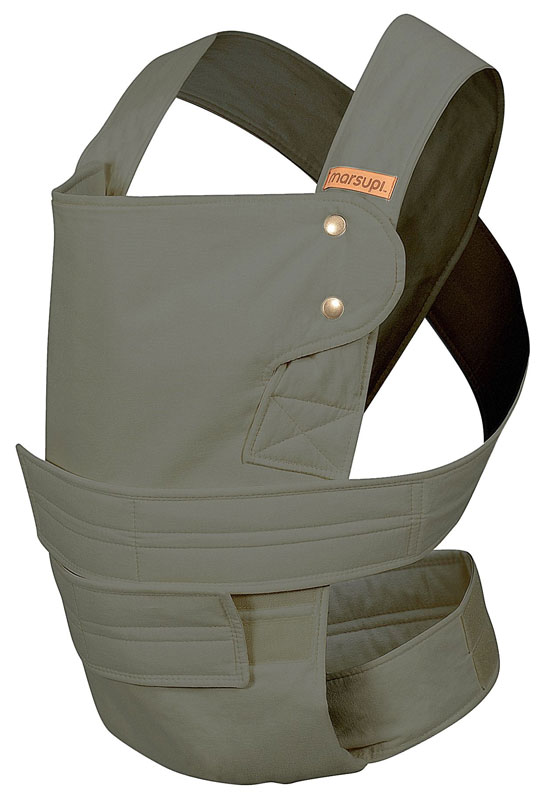
A Half Buckle baby carrier combines a buckle-fastened waist belt with long shoulder straps that are tied. It combines the stability of a structured waist belt with the flexible adjustment of wrap-style shoulder straps.
Because the shoulder straps are tied each time, a Half Buckle can be particularly convenient when several people with different body shapes regularly use the same carrier.
Typical features
- buckle-fastened waist belt
- long tie-on shoulder straps
- flexible adjustment for different body shapes
- often made from soft woven wrap fabric
- individual weight distribution through the shoulder straps
A Half Buckle may suit you if …
- several people regularly share the same carrier
- you enjoy tie-on shoulder straps
- you prefer a combination of buckle and wrap
- you want flexible adjustment without repeatedly readjusting shoulder buckles
Full Buckle Baby Carriers
A Full Buckle baby carrier uses buckles on both the waist belt and shoulder straps. There are no long fabric straps that need to be tied or knotted.
Once adjusted to the wearer, the carrier can generally be put on particularly quickly. Full Buckles are therefore popular with families looking for a straightforward everyday carrier.
Typical features
- buckles on the waist belt and shoulder straps
- quick to put on and take off
- individually adjustable shoulder straps
- adjustable waist belt
- depending on the model, adjustable seat width and panel height
- often padded shoulder straps
A Full Buckle may suit you if …
- you want to avoid tying straps
- you want a quick everyday carrier
- you prefer buckles and structured straps
- you frequently put your carrier on and take it off while out and about
Hybrid, Half Buckle or Full Buckle?
| Feature | Hybrid Wrap Carrier | Half Buckle | Full Buckle |
|---|---|---|---|
| Basic System | wrap-like feel with simplified construction | buckle waist belt + tie straps | buckled waist and shoulder straps |
| Putting It On | depends on model | some tying required | buckle fastening |
| Adjusting to Wearer | very flexible | very flexible | adjustable straps |
| Carrying Feel | soft and wrap-like | flexible and close-fitting | more structured |
| Sharing Between Wearers | depends on model | particularly convenient | straps may need readjusting |
| Ideal For | soft wrap-like carrying | flexibility and individual adjustment | quick and straightforward use |
Which Carrying Positions Are Possible?
The available carrying positions depend on the carrier, your child's age and their developmental stage.
Typical carrying positions include:
- Front carry: baby facing the wearer
- Hip carry: depending on the carrier and developmental stage
- Back carry: for appropriately developed older babies and toddlers
For newborns, an upright inward-facing front carry is the primary carrying position. We do not recommend forward-facing carrying.
Ergonomic Positioning in a Baby Carrier
A well-fitting baby carrier should support a developmentally appropriate position. Rather than forcing the baby into a fixed seat, the carrier should be adjusted to the child's size and developmental stage.
Look for:
- supported thighs
- an appropriate M-position
- support for the baby's back
- a close and sufficiently secure fit
- age-appropriate head and neck support
- completely unobstructed airways at all times
Clear Airways Always Come First
Your baby's nose and mouth must remain completely clear and visible at all times. With newborns and sleeping babies in particular, make sure that the baby does not slump in the carrier and that their chin does not fall onto their chest.
Comfort for the Wearer
A baby carrier needs to fit not only the baby but also the wearer. Height, shoulder width, body shape and personal preferences all influence which system feels most comfortable.
Important factors include:
- comfortable waist-belt positioning
- comfortable shoulder straps
- balanced weight distribution
- sufficient adjustment options
- no uncomfortable pressure points
- a design that suits the wearer's body shape
This is why there is no single perfect baby carrier for every parent. A carrier that fits one person exceptionally well may feel less comfortable for another.
Baby Carriers for Older Babies and Toddlers
As children grow and become heavier, the requirements for a baby carrier change. The seat and back panel need to provide sufficient space and appropriate support, while comfortable weight distribution becomes increasingly important for the wearer.
Larger baby carriers and dedicated toddler carriers are available for this stage. They provide dimensions designed for the proportions of bigger babies and toddlers.
Baby Carriers in Everyday Life
A baby carrier can be a practical alternative or complement to a pushchair in many situations.
It can be particularly useful:
- while shopping
- on walks
- when travelling
- on public transport
- on stairs
- on uneven terrain
- at home
- when your baby wants plenty of physical contact
Which Materials Are Used for Baby Carriers?
Baby carriers are made from a variety of materials. In addition to conventional cotton, manufacturers use woven wrap fabrics, linen, blended fabrics and particularly breathable materials.
When choosing a material, consider:
- skin friendliness
- breathability
- care requirements
- durability
- softness
- fabric weight
- suitability for different seasons
Doll Carriers
Children love to imitate everyday family life. A doll carrier allows them to carry a favourite doll or soft toy in a similar way to a parent carrying a baby.
A doll carrier is specifically a toy for dolls and soft toys and must not be used to carry babies or other children.
Typical doll carrier features
- child-friendly size
- simple handling
- designed for dolls and soft toys
- lightweight materials
- adjustable straps depending on the model
Learning through play
- encourages imaginative role play
- allows children to imitate everyday family activities
- can help involve older siblings through play
- allows favourite dolls and toys to come along
Which Baby Carrier Is Right for You?
The right baby carrier depends on your baby, your body shape and your personal requirements. How often, where and for how long you intend to carry are also important considerations.
Before choosing, consider:
- How old and how big is your baby?
- What are your baby's individual proportions?
- Who will use the carrier?
- How often do you want to carry?
- Do you prefer tying or buckles?
- Do you want a carrier that is particularly quick to put on?
- Would you like to back carry later?
- Which materials do you prefer?
No Single Baby Carrier Is Automatically Best for Every Family
Newborn carriers, hybrid wrap carriers, Half Buckles and Full Buckles all have different strengths. What matters is finding a carrier that fits your baby, your body and your everyday life.
Baby Carriers – Our Conclusion
A good baby carrier combines physical closeness with freedom of movement and can make everyday family life considerably easier. The right system depends on your baby, the wearer and your individual requirements.
Newborn carriers provide adjustment for smaller babies, hybrid wrap carriers combine a wrap-like feel with simplified handling, Half Buckles combine a buckled waist belt with tie-on shoulder straps, and Full Buckles offer particularly quick fastening with buckles.
The essentials are always an appropriate fit, supportive positioning, unobstructed airways and a comfortable fit for the wearer.
Newborn Carrier = small adjustment & close fit
Hybrid Wrap Carrier = soft & flexible
Half Buckle = adjustable & tie-on
Full Buckle = quick & straightforward
Best Baby Carrier = the one that fits baby and wearer